The Complete Guide to Eco-Friendly Pet Waste
Disposal
Because your pet’s carbon pawprint shouldn’t be bigger than your own.
Owning a pet is one of life’s greatest joys. You get unconditional love, endless entertainment, and a furry companion who thinks you’re the most interesting person in the world.
But there’s one part of pet ownership that rarely makes it onto Instagram.
The poop.
Whether you’re following your dog around the park with a little plastic bag or cleaning your cat’s litter box for the third time today, dealing with pet waste is simply part of the job.
Here’s something you might not have considered: how you dispose of that waste can affect the environment.
The good news? Eco-friendly pet waste disposal doesn’t require expensive gadgets, a backyard composting laboratory, or a degree in environmental science.
A few practical changes can help reduce unnecessary plastic, protect waterways, and make your pet-care routine a little greener.
Let’s talk about how to handle your pet’s less glamorous contributions to the planet.
1. Why Pet Waste Is an Environmental Problem
You might be thinking, “It’s just poop. Surely nature knows what to do with it?”
Well, yes and no.
Unlike manure from many plant-eating animals, dog and cat waste can contain harmful bacteria and parasites.
When pet waste is left on pavements, lawns, or walking trails, rainfall can wash contaminants into storm drains, rivers, and lakes.
Pet waste can also contribute excess nutrients to waterways, potentially affecting water quality.
And then there’s the plastic.
Millions of pet owners use disposable bags to collect dog waste. Conventional plastic bags can persist in the environment for a long time if improperly discarded.
The takeaway: Picking up after your pet is essential, but choosing how to collect and dispose of the waste responsibly matters too.
Your dog may consider the neighbourhood park its personal bathroom. The local ecosystem would prefer otherwise.
2. Biodegradable vs Compostable Dog Poop Bags

Walk into a pet shop and you’ll find waste bags labelled “green,” “natural,” “biodegradable,” and “compostable.”
They all sound wonderful.
But are they actually better for the environment?
Biodegradable dog poop bags
Biodegradable materials can be broken down by microorganisms under suitable conditions.
The catch? Those conditions matter.
A bag labelled biodegradable may not break down quickly in a landfill, where oxygen, moisture, and other conditions can be very different from those required for decomposition.
The word “biodegradable” alone doesn’t tell you how long a bag will take to break down or what will remain afterward.
Compostable dog poop bags
Compostable bags are designed to break down under specific composting conditions.
Some are certified for industrial composting, while others are designed for home composting.
However, a compostable bag doesn’t automatically mean the dog waste inside it is suitable for composting.
Many municipal composting facilities don’t accept pet waste, even when it’s collected in certified compostable bags.
Which bag should you choose?
| Bag type | Advantage | Limitation |
|---|---|---|
| Conventional plastic | Affordable and reliable | Persistent plastic waste |
| Biodegradable-labelled | May break down under certain conditions | Environmental claims can be vague |
| Certified compostable | Designed for specified composting conditions | Often unsuitable for normal pet waste collection |
| Plant-based plastic | May reduce fossil-based raw material use | Not necessarily biodegradable or compostable |
My advice: Check the bag’s certification and your local disposal rules before paying extra for environmental claims.
If your local council requires dog waste to go into general rubbish, choose a sturdy, appropriately sized bag and avoid unnecessary double-bagging.
The Poop Scoop: Just because a bag is green doesn’t mean it’s environmentally friendly. Sometimes it’s simply plastic with excellent public relations.
3. Five Smarter Ways to Dispose of Dog Waste
There’s no universal solution that works for every household. The best approach depends on where you live and how your local waste system operates.
1. Use an approved general waste bin
For many pet owners, collecting dog waste and placing it in an approved rubbish bin is the simplest and most practical option.
It prevents waste from being left in parks or washed into waterways.
Use bags that are large enough to prevent leaks without being unnecessarily oversized.
2. Consider a dedicated pet waste composting system
Specialised composting systems exist for dog waste, but they require careful management.
Dog faeces can contain pathogens, and ordinary backyard compost piles may not reach conditions sufficient to eliminate them.
Never assume composted dog waste is safe for vegetable gardens or other edible crops.
Check local regulations and established composting guidance before attempting this method.
3. Look for specialised pet waste collection services
Some communities have services that collect pet waste for controlled treatment.
Before signing up, ask how the waste is processed and whether the service can substantiate its environmental claims.
A company calling itself “eco-friendly” isn’t necessarily proof of sustainable disposal.
4. Flush only where permitted
Some wastewater authorities allow unbagged dog faeces to be flushed, while others discourage or prohibit it.
Always check your local wastewater rules first.
Never flush plastic bags, compostable bags, or cat litter. Septic systems may also be unsuitable for pet waste.
5. Reduce unnecessary pet waste accessories
Sometimes the simplest environmental improvement is buying less.
Use a durable waste-bag dispenser, avoid excessive packaging, and purchase only the supplies you actually need.
Your dog doesn’t care whether its poop-bag holder matches its collar anyway.
4. Eco-Friendly Cat Litter: Better Choices for Cat Owners
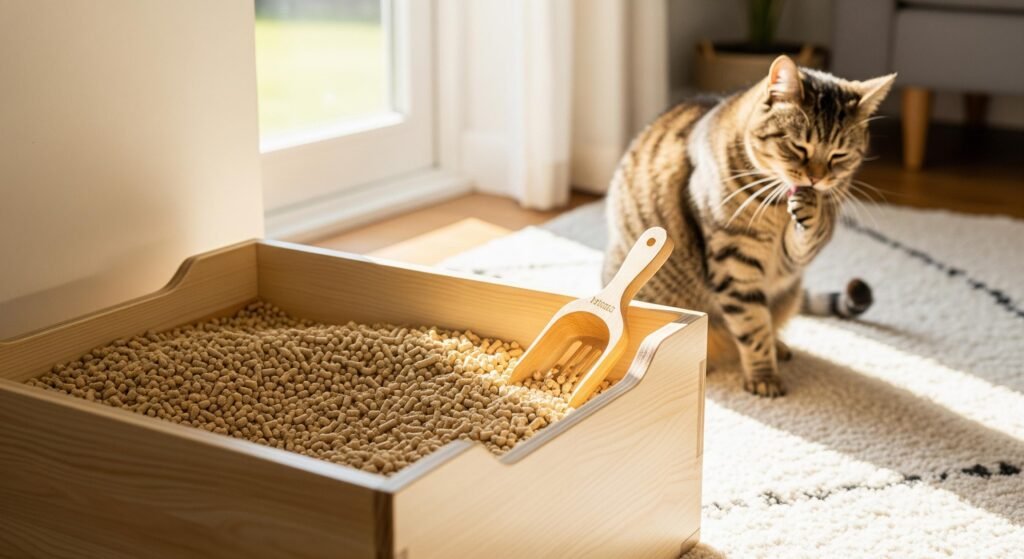
Cats are fascinating creatures.
They sleep most of the day, demand food at inconvenient hours, and somehow convince us that cleaning their toilet is a privilege.
Fortunately, cat owners have options when it comes to more sustainable litter choices.
Traditional clay litter
Clay litter is popular because it offers effective clumping and odour control.
However, many clay litters use mined materials such as bentonite, and extraction and transportation have environmental impacts.
Plant-based cat litter
Alternatives include litter made from wood pellets, recycled paper, corn, and wheat.
Each has advantages and limitations.
| Litter type | Potential benefit | Consideration |
|---|---|---|
| Clay | Effective clumping | Mining impacts and weight |
| Wood pellets | Often made from wood by-products | Different texture and absorption |
| Recycled paper | Uses recovered materials | May need more frequent replacement |
| Corn-based | Plant-derived and sometimes clumping | Performance and sourcing vary |
| Wheat-based | Renewable material | Odour control and dust vary |
Plant-based litter isn’t automatically better in every situation. Manufacturing, packaging, transportation, and disposal all affect its environmental footprint.
Can you flush cat litter?
Generally, avoid flushing cat litter or cat faeces unless your wastewater authority explicitly permits it.
Even litter advertised as flushable may cause plumbing problems.
Cat faeces can also contain Toxoplasma gondii, a parasite associated with toxoplasmosis.
For most households, disposing of contaminated litter through the locally approved waste system is the more practical choice.
And if you’re switching litter types, introduce the new product gradually.
Cats are not particularly enthusiastic about surprise bathroom renovations.
5. Can You Compost Pet Waste Safely?
Composting is often promoted as the ultimate environmentally friendly solution.
Kitchen scraps? Compost them.
Dry leaves? Compost them.
Pet poop? That’s where things get complicated.
Dog and cat waste may contain harmful microorganisms and parasites that aren’t reliably destroyed in ordinary home compost piles.
For this reason, avoid adding pet waste to compost intended for growing vegetables, fruits, or herbs.
Dedicated pet waste composting systems may be appropriate under carefully managed conditions, but they aren’t suitable for everyone.
If you’re interested, consult local environmental authorities and recognised technical guidance.
The Poop Scoop: Composting is a bit like cooking. The right ingredients, temperature, and timing matter. Unfortunately, throwing everything into a bucket and hoping for the best isn’t a recipe for success.
6. Eco-Friendly Pet Waste Disposal for Apartment Living
Not everyone has a garden or space for composting.
If you live in an apartment, responsible waste disposal can still be straightforward.
Use a secure, covered bin. A compact, easy-to-clean bin helps control odours until waste can be removed.
Follow building rules. Some apartment complexes provide designated pet waste stations or disposal facilities.
Dispose of waste promptly. Avoid storing pet waste unnecessarily, particularly in warm weather.
Keep supplies organised. Store collection bags near the door so you’re always prepared for walks.
The best sustainable routine is one you’ll actually follow.
After a long day at work, nobody wants a complicated 12-step recycling ritual just because the dog needed a bathroom break.
7. Five Pet Waste Myths That Need to Go
Myth 1: “Dog poop is natural, so leaving it outside is fine.”
Fact: Dog waste can introduce unwanted bacteria, parasites, and nutrients into the environment.
Natural doesn’t always mean harmless.
Myth 2: “All biodegradable bags disappear quickly.”
Fact: Decomposition depends on the material and environmental conditions.
A biodegradable label isn’t a guarantee of rapid breakdown.
Myth 3: “Compostable bags can go into any compost bin.”
Fact: Different composting systems have different requirements, and many facilities reject pet waste.
Myth 4: “Plant-based cat litter is always flushable.”
Fact: Plant-based materials can still cause plumbing problems, and cat faeces present additional sanitation concerns.
Myth 5: “Expensive eco-friendly products must be better.”
Fact: Higher prices don’t necessarily mean lower environmental impact.
Look for credible evidence rather than impressive packaging.
Your cat may judge your purchasing decisions, but the environment doesn’t care about fancy branding.
8. The Seven-Day Greener Pet Waste Challenge
Want to improve your pet-care habits without overhauling your entire lifestyle?
Try this simple challenge.
| Day | Your mission |
|---|---|
| Monday | Review how you currently dispose of pet waste. |
| Tuesday | Check your local waste disposal rules. |
| Wednesday | Examine the environmental claims on your waste bags or litter. |
| Thursday | Identify unnecessary packaging you could reduce. |
| Friday | Improve your waste storage and cleaning routine. |
| Saturday | Explore local pet waste treatment or collection options. |
| Sunday | Choose two improvements you can maintain long-term. |
You don’t need to become a sustainability expert overnight.
Small, consistent improvements are more useful than ambitious changes that last only three days.
9. Frequently Asked Questions
What is the most eco-friendly way to dispose of dog poop?
The best option depends on local waste management systems. Collecting dog waste promptly and using an approved disposal method is a sensible starting point. Specialised treatment programmes may offer alternatives where available.
Are compostable dog poop bags worth buying?
They may be worthwhile when an appropriate facility accepts both the bags and the waste. If they end up in general rubbish, their environmental advantage is less certain.
Can dog poop go into a green waste bin?
Only if your local waste collection authority explicitly allows it. Many garden and food waste services exclude animal faeces.
Can I compost dog poop in my backyard?
Ordinary home composting may not reliably eliminate harmful microorganisms. Dedicated systems require careful management, and the resulting material should not be used on edible crops without appropriate validated treatment.
Is biodegradable cat litter better for the environment?
Some plant-based litters may reduce reliance on mined materials, but the overall environmental benefit depends on production, transportation, packaging, use, and disposal.
How can apartment owners reduce pet waste pollution?
Follow building disposal rules, collect waste promptly, avoid unnecessary packaging, and maintain clean, secure waste containers.
10. Conclusion: Small Changes, Cleaner Pawprints
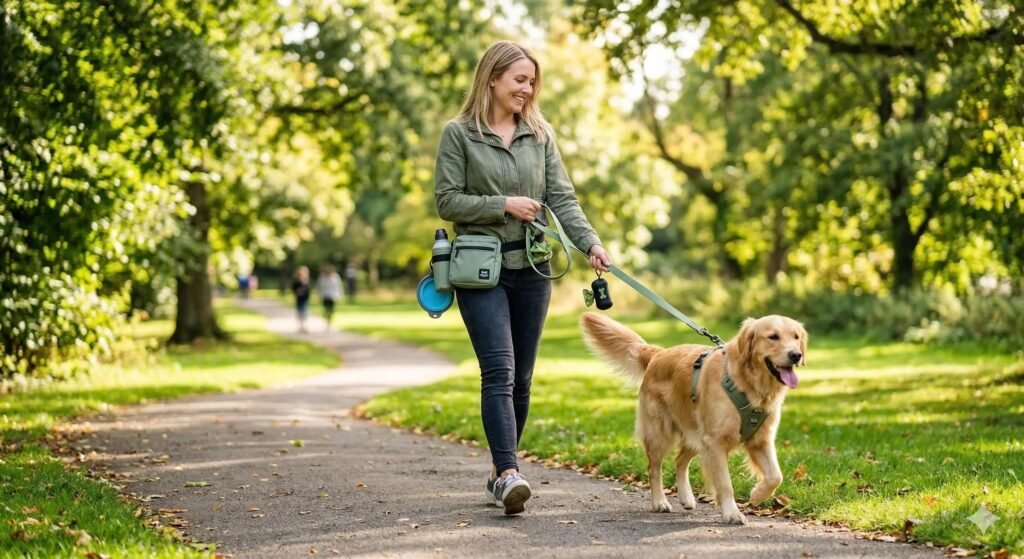
Our pets bring enormous happiness into our lives.
They make us laugh, keep us company, and occasionally destroy things that were perfectly fine five minutes earlier.
And yes, they also produce a surprising amount of waste.
But responsible pet ownership isn’t about being environmentally perfect.
It’s about making thoughtful choices that protect public spaces, reduce unnecessary consumption, and support healthier communities.
Whether you improve your waste collection routine, explore more sustainable litter options, or become more careful about environmental product claims, every sensible change is a step forward.
Your dog may never appreciate your environmental efforts.
Your cat will almost certainly remain unimpressed.
But cleaner parks, healthier waterways, and a more sustainable approach to pet ownership are rewards worth working toward.
Because loving our pets also means taking care of the planet they call home.
Sources and Further Reading
For additional information, consult these authoritative resources:
- US Environmental Protection Agency (EPA): Guidance on plastics, composting, and waste management — https://www.epa.gov
- Centers for Disease Control and Prevention (CDC): Toxoplasmosis prevention and safe handling of cat faeces — https://www.cdc.gov/toxoplasmosis
- US Department of Agriculture (USDA): Composting dog waste guidance — https://www.usda.gov
- University of Florida IFAS Extension: Educational guidance on composting dog waste — https://sfyl.ifas.ufl.edu
Environmental regulations and pet waste disposal requirements vary by location. Always check with your local council or wastewater authority before composting or flushing pet waste.